Found Color: Chinese Mulberry Heart Wood
I have used bark and leaves from the mulberry trees on our property over the last few years. Like many bark and leaves dyes it acts very differently depending on if you use soy pre-treated fabric or alum mordanted fabric. Favoring the warmer familiar tannin tones with soy and the flavonoid yellows with alum.
“Old” Fustic Mulberry (maclura tinctoria) is a well documented heartwood dye source from a mulberry variety that grows in tropical regions of the Americas. Old Fustic Mulberry is not what we have growing where we live.
Its likely the trees on our property are hybrids of the native red mulberry (Morus Ruba) and naturalized Chinese white mulberry (Morus Alba). The Chinese mulberry was introduced across a wide swath of the American colonies by European settlers in the 1770s who were trying to develop a silk industry. The industry never came to fruition, but the white mulberry has thrived. It is able to cross with the native red mulberry and has, in most areas, “swamped” the DNA pool so that most mulberry trees you see now in our region are hybrids. It is relatively easy to identify a true native red mulberry if you know what to look for. Surprisingly, you can not go based on the berry color, while the Chinese mulberry is called “white” mulberry the berries are typically purplish red when ripe. Mulberry Identification Chart
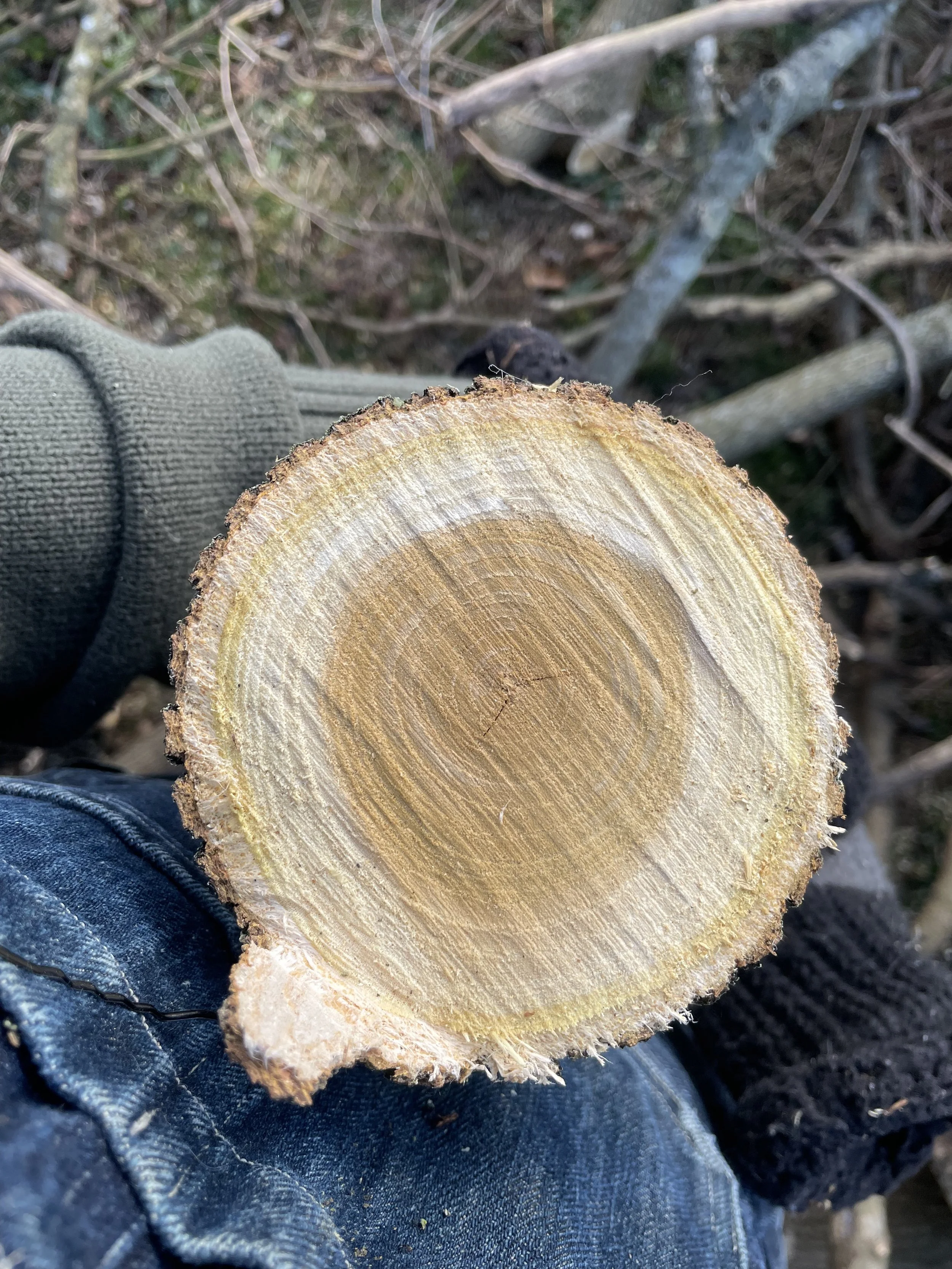
A few weeks ago my partner, Joe, cut down a rather large mulberry tree that was growing from the base of an even larger native eastern red cedar on our property. It wasn’t a great place for the tree to be growing and Joe wanted to use a good portion of wood for making mushroom logs. When he felled the tree I was excited to see how visibily yellow the heart wood of the trunk was. It was the first time I had gotten a good look at a cross cut of a large local mulberry.
I would not harvest the heart wood of a native tree, or harvest any dyes stuffs in a way that would harm the plant. It this case, with a non-native Chinese mulberry (or possible hybrid) that heart wood is fair game.
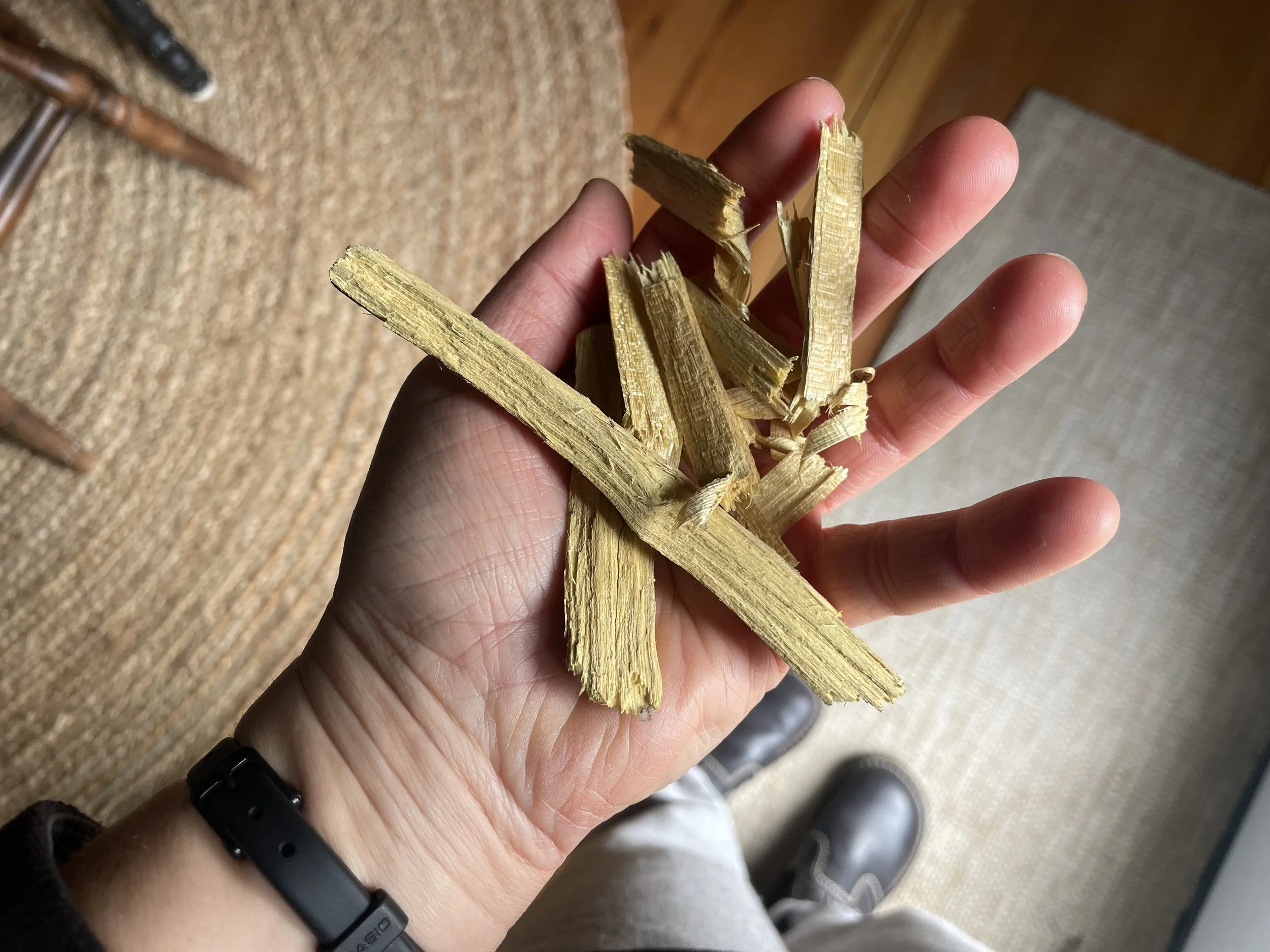
Joe made a stack of mushroom logs with the medium logs and then split the larger pieces for fire wood. I was able to pull two split logs that are completely heart wood and I will be using those for dyeing in the spring. I am not quite sure how I will process them yet. I might just use the miter saw to cut thin slices and capture the saw dust.
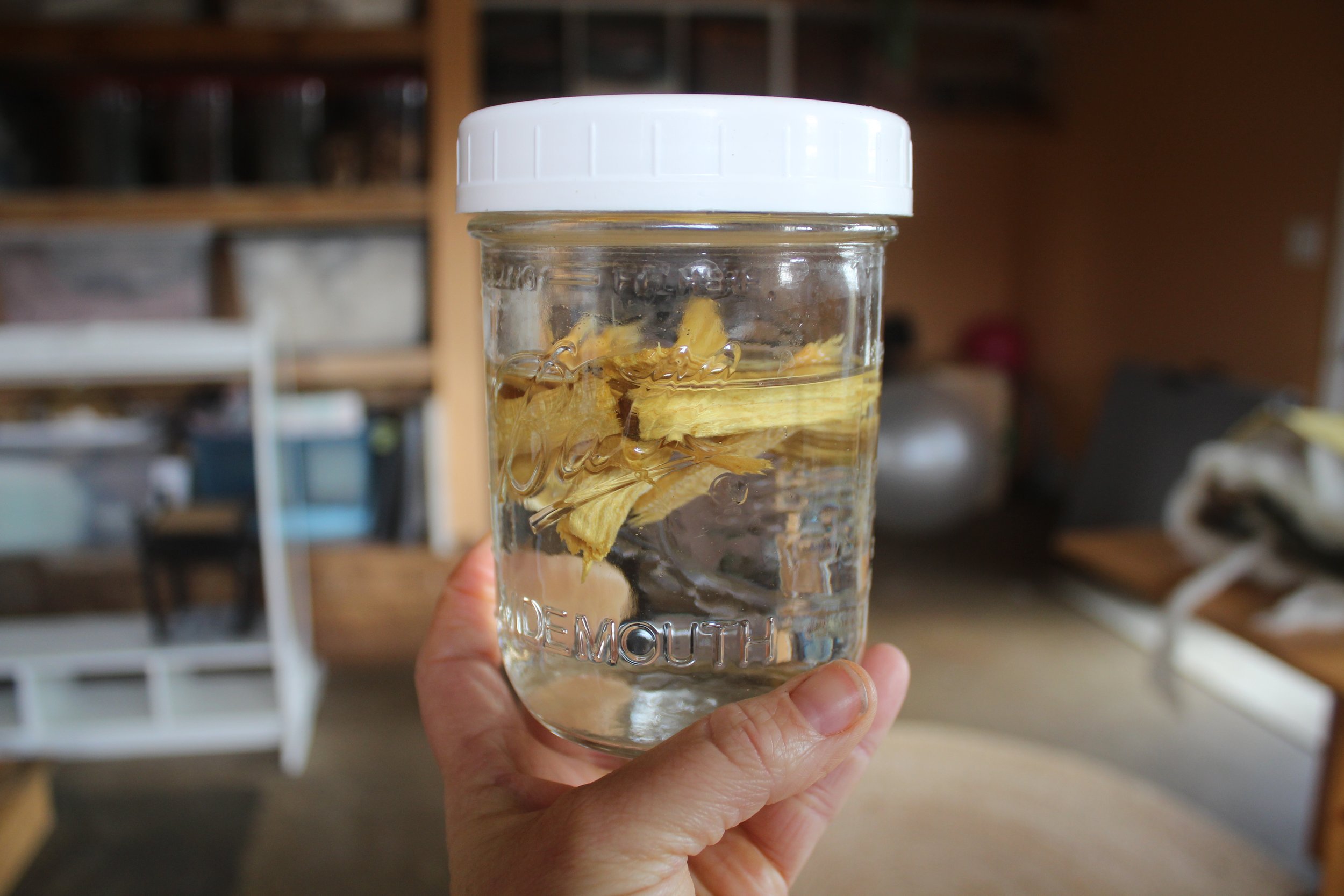
I did pop a few small pieces of the heart wood in a glass jar with water. I will leave that in the window sill over the next few month and see what kind of passive extraction occurs.
I am sure that this white mulberry heart wood will not be as strong of a dyestuff as the old fustic but I am excited to see what can be done with an abundant non-native plant.